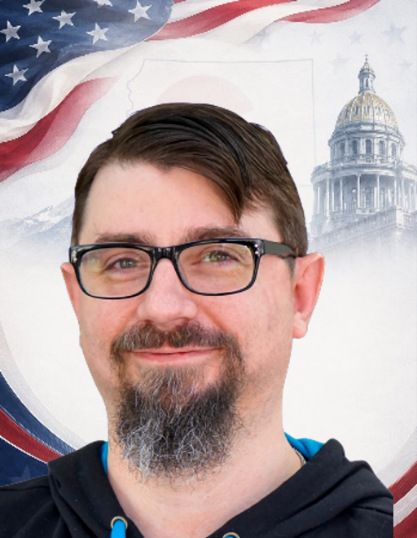
Daniel Frick: House District 53 Candidate Interview
Daniel Frick discusses victim advocacy, family rights, and government accountability in our inaugural issue’s HD53 interview.

From the September 11, 2026 inaugural issue of The Colorado Conservative. Candidate status and campaign links reflect the printed issue.
Colorado House of Representatives • House District 53 • Candidate in the printed issue
Campaign website · Campaign donation link
The interview
Who is Daniel beyond the campaign?
I am a veteran, dad, small-business owner, and paid caregiver raising my kids in northern Fort Collins. I served in the Air Force as an avionics specialist, later worked as a contractor in Afghanistan, and built a digital marketing agency. Faith, family, and work shaped me more than politics. Caring for my son through Medicaid and living through my stepdaughter’s catastrophic hit-and-run showed me how systems fail real families. I am not a career politician. I am a taxpayer who got tired of watching common sense lose to bureaucracy.
Why are you running?
I decided to run because of Carissa. After the hit-and-run that left my stepdaughter with a permanent brain injury, my wife and I saw how the system failed our family. She has taken that fight public through advocacy and speaking. I chose the path of a successful election and legislative change. We are doing this together, so Colorado treats victims with real seriousness: higher accountability before trial, a voice for families, and consequences that match lifelong harm. I am running now because waiting would have meant accepting a system that already failed someone we love.
What makes your district unique?
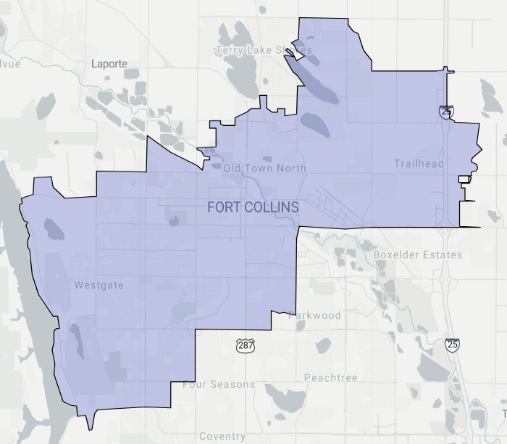
House District 53 is central and northern Fort Collins, a place that still makes things. New Belgium and Odell Brewing are headquartered here, along with OtterBox and Cheba Hut. Colorado State University is part of this community. Old Town is not a replica of somewhere else. Harper Goff grew up here, and Disneyland’s Main Street, U.S.A. was designed with Fort Collins buildings in mind, including City Hall and the bank. What I value is that mix of homegrown business, campus energy, and a downtown people still recognize as their own. The concern I hear is whether families and workers can still afford to stay.
What would be your three highest legislative priorities?
First, criminal justice and mental health reform that puts victims and accountability first, including stronger pretrial standards in serious cases. Second, parental and family rights so parents direct their children’s education and health. Third, cutting wasteful spending so Colorado lives within its means and begins to become more affordable again. In the first session I would look for bills that raise bonds and victim input in severe injury cases, protect parental authority in schools and the community, and force real audits and sunset reviews on programs that do not deliver. Protecting the 2nd Amendment would follow immediately after.
How would you address Colorado’s affordability challenges?
The legislature cannot wish prices down, but it can stop making them worse. Cut tax and fee growth. Streamline housing permits and zoning delays. Reduce the regulatory pile that small businesses pass on to customers. Support reliable energy from nuclear and natural gas so utility bills stop climbing (and debunking the "green energy" myth - hello fiberglass shedding?). On insurance and healthcare, attack waste and mandates that inflate premiums. Food and operating costs fall when energy, labor rules, and taxes are not constantly stacked higher. Affordability starts with government getting out of the way.
What is your approach to education?
Parents hold the primary duty. Teachers should teach reading, writing, math, and usable skills. Local school boards should set direction close to home. The state should set clear standards, measure results, and stop pushing ideology. I support phonics-based reading, real math, school choice including the tax-credit scholarship program, and protecting the First Amendment rights of faith-based schools. I oppose policies that sideline parents on a child’s health or identity. Results matter more than slogans about being ranked first while too many kids still cannot read proficiently.
How would you approach public safety and individual liberty?
Protect residents by backing law enforcement, prosecuting violent crime, and making pretrial release match real risk. Hold offenders accountable with consequences that fit the harm, especially when victims live with lifelong injury. Safeguard constitutional rights at the same time: speech, religion, the Second Amendment, and due process. Government overreach is not safety. Safety is catching criminals, keeping dangerous people from walking out on paper bonds, and leaving law-abiding people free to work, worship, and raise their families.
What does conservative government mean to you?
It means a state that does a few things well and stops pretending it can run everything else. Does more protecting rights, enforcing laws, keeping an honest budget, and supporting families. Do less micromanaging of businesses, schools, and personal decisions. Stop expanding programs that create dependency, waste money, and crowd out parents and local communities. Conservative government is limited, lawful, and humble about what the Golden Dome can fix.
How will you turn your principles into results?
I will look for votes on shared problems: waste, basic literacy, caregiver red tape, and housing delays. I can work with anyone who will cut costs or protect victims. I will not trade away parental rights, the right to keep and bear arms, or the idea that flight from a serious crime is flight risk. Compromise on timing or wording can be productive. Compromise that guts the principle is surrender. Results come from persistence, clear bills, and telling voters exactly where I stand.
Why should voters place their trust in you?
I have lived the issues I talk about: payroll, caregiving, military service, and a family crushed by a hit-and-run and a weak justice response. I am not here to join a club in Denver. I am here to keep families in Fort Collins, protect parents, and make the system answer to victims and taxpayers. The commitment is simple. I will tell you the truth, vote that way, and take the phone call when the bill affects your life (and have already done so to prove it). Remember this: I work for you, not the process.
District notes from the magazine
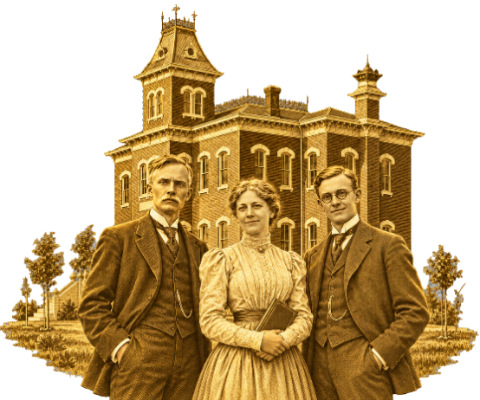
Colorado State University (CSU) predates Colorado statehood by 6 years, being formed in 1870. CSU was formed with its President, Elijah Edwards, 2 faculty members, and only five students. The first graduating class in 1884 contained only 3 people: Leonidas Loomis, George Glover, and the first female to earn a college degree in the state of Colorado, Elizabeth “Libbie” Coy.
Disney designer Harper Goff used buildings from his hometown of Fort Collins and Walt Disney’s hometown of Marceline, Missouri as models for Disneyland’s Main Street, U.S.A.
Downtown Fort Collins’ wide streets were deliberate. Franklin C. Avery laid out College and Mountain avenues approximately 140 feet wide and Laporte Avenue approximately 150 feet wide, reportedly reasoning that there was plenty of room and he intended to use it. He also participated in surveying Greeley and became one of northern Colorado’s most influential irrigation, banking and real-estate figures.
Industries in the district
- Educational Services
- Health care and social assistance
- Accommodation and food services
- Professional, scientific and technical services
- Retail Trade
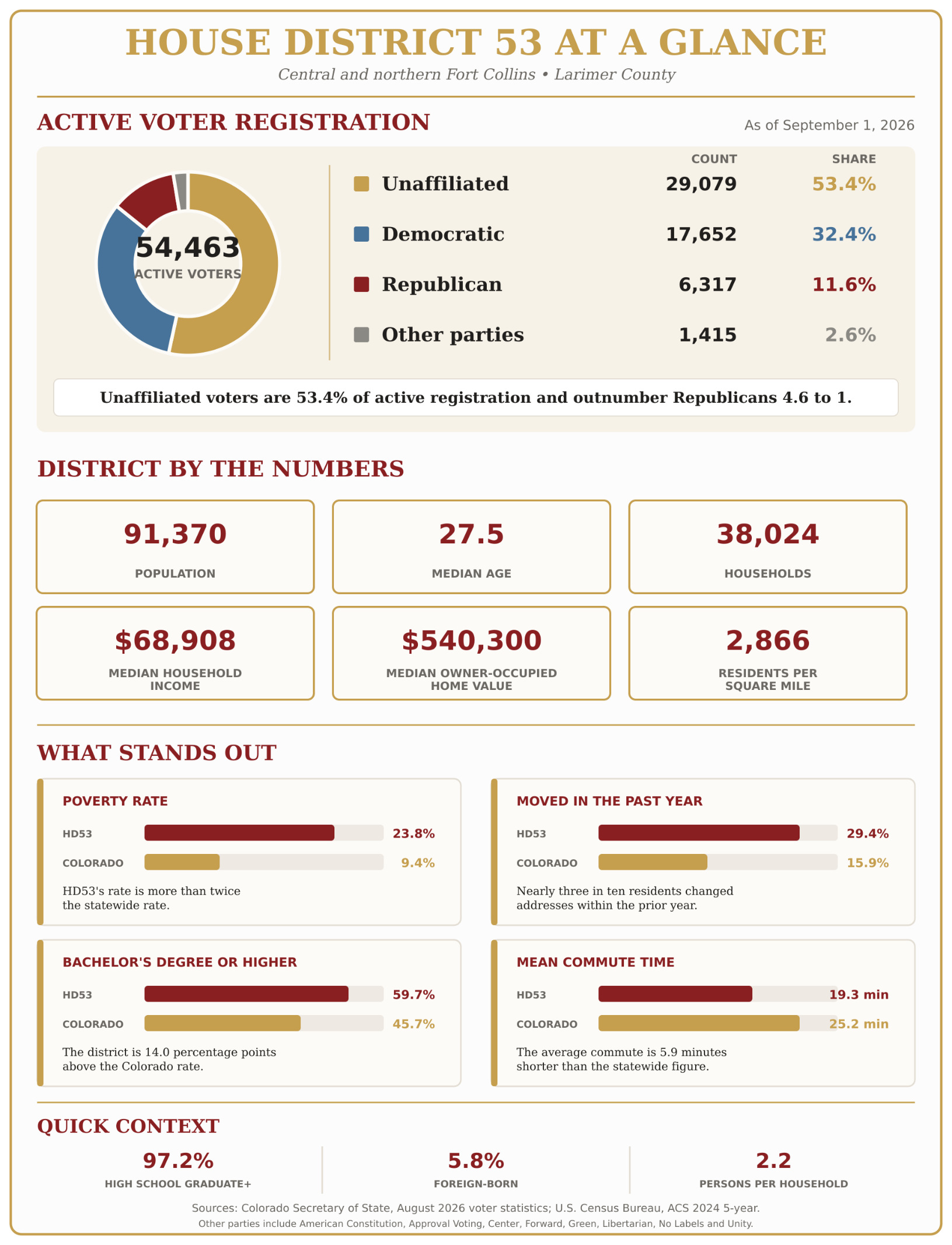
District at a glance